



07 Mar How Physio & Shockwave Therapy Can Help Get You Back on Your Feet
Summary
Plantar fasciitis is a common cause of heel pain, particularly among active people. Physiotherapy combined with shockwave therapy can help reduce pain, promote healing, and address the underlying causes of the condition. Treatment typically includes movement assessment, targeted exercises, and shockwave therapy to support recovery. Early care can help people in Sherwood Park return to running, sports, and daily activities more quickly.
Heel pain can quickly turn everyday activities – running, walking the dog, or even getting out of bed – into a frustrating challenge. One of the most common causes of persistent heel pain is plantar fasciitis, a condition that affects many active people in Sherwood Park and the surrounding area.
The good news is that physiotherapy combined with shockwave therapy can effectively treat plantar fasciitis, helping you recover faster and return to the activities you love. If you’re dealing with heel pain, here’s what you need to know about plantar fasciitis and how modern physiotherapy treatments can help.
What Is Plantar Fasciitis?
Plantar fasciitis is an overuse injury involving the plantar fascia, a thick band of connective tissue that runs along the bottom of your foot and connects your heel to your toes. When this tissue becomes irritated or overloaded, it can develop tiny tears that lead to inflammation and pain – usually felt in the heel or arch of the foot. According to the Mayo Clinic, plantar fasciitis is one of the most common causes of heel pain and often causes sharp pain with the first steps in the morning or after periods of rest.
Learn more from their medical guide here.
Common Symptoms
People with plantar fasciitis often experience:
- Sharp heel pain with the first steps in the morning
- Pain after running or exercise
- Heel or arch tenderness
- Tightness in the foot or calf
- Pain after long periods of standing or walking
Many active people in Sherwood Park develop plantar fasciitis due to running, sports, long work shifts, or sudden increases in activity levels.
Common Causes
Several factors can increase stress on the plantar fascia, including:
- Running or high-impact sports
- Tight calves or Achilles tendons
- Flat feet or high arches
- Sudden increases in activity
- Standing or walking for long periods
- Improper footwear
Without proper treatment, plantar fasciitis can become chronic and last for months or even longer.
How Physiotherapy Treats Plantar Fasciitis
Physiotherapy is one of the most effective non-surgical treatments for plantar fasciitis. A physiotherapist focuses on reducing pain, improving mobility, and correcting the underlying causes of the condition. Your treatment plan may include:
Movement and Biomechanical Assessment
Your physiotherapist will assess:
- Foot mechanics
- Walking or running patterns
- Ankle mobility
- Strength in the calves, hips, and lower legs
This helps identify why your plantar fascia is being overloaded.
Targeted Strengthening and Stretching
Rehabilitation exercises help reduce stress on the plantar fascia by improving flexibility and strength in key areas, including:
- Calf muscles
- Foot intrinsic muscles
- Achilles tendon
- Hip stabilizers
These exercises help prevent the condition from coming back.
Manual Therapy
Hands-on techniques may be used to:
- Improve joint mobility in the foot and ankle
- Release tight muscles
- Reduce tissue stiffness
Shockwave Therapy for Plantar Fasciitis
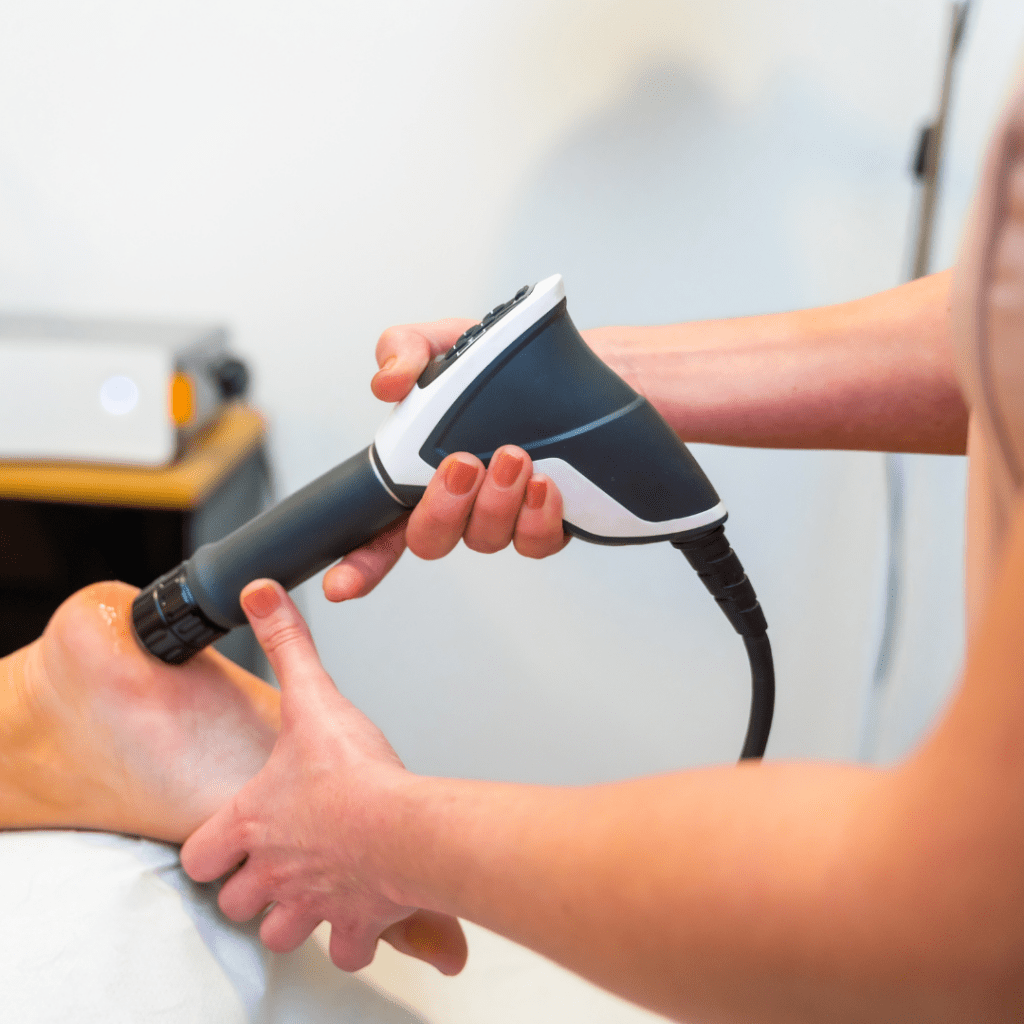
Acceleration Physiotherapy now combines rehabilitation with shockwave therapy, which is especially helpful for persistent heel pain. Shockwave therapy uses high-energy acoustic waves delivered to the injured tissue. These waves stimulate healing by:
- Increasing blood flow
- Stimulating tissue regeneration
- Breaking down scar tissue
- Reducing chronic inflammation
The treatment is non-invasive and requires no downtime, making it ideal for active individuals.
Read more about Shockwave Therapy at Acceleration Physiotherapy Sherwood Park
What to Expect During Treatment
If you visit a physiotherapy clinic in Sherwood Park for plantar fasciitis treatment, here’s what a typical plan may look like.
Initial Assessment
Your first appointment will typically include:
- A detailed injury history
- Foot and gait analysis
- Range-of-motion testing
- Strength assessment
Your physiotherapist will then design a personalized treatment plan.
Shockwave Therapy Sessions
Shockwave therapy treatments usually:
- Last 5–10 minutes
- Require 3–5 sessions for best results
Most people notice improvement within a few weeks.
Guided Exercise Program
You’ll also receive exercises to perform at home to support recovery and prevent recurrence.
Benefits of Physiotherapy and Shockwave Therapy
Combining physiotherapy with shockwave therapy provides several advantages:
Faster Pain Relief
Shockwave therapy stimulates the body’s healing response, often reducing pain faster than exercise alone.
Treats the Root Cause
Physiotherapy addresses biomechanics, muscle imbalances, and mobility limitations that contribute to plantar fasciitis.
Get Back to Activity
Active adults can often return to their favourite sports, workouts and everyday movements much sooner with proper, timely treatment.
When to Seek Treatment
Many people try to “push through” heel pain, but early treatment leads to better outcomes. Consider seeing a physiotherapist if you experience:
- Heel pain lasting longer than 1–2 weeks
- Pain that worsens with activity
- Difficulty walking or exercising
- Recurring heel pain after running or sports
The earlier plantar fasciitis is treated, the faster recovery tends to be.
Plantar Fasciitis Treatment in Sherwood Park
If heel pain is interfering with your workouts, daily routine, or weekend activities, physiotherapy combined with shockwave therapy can help you recover safely and effectively. A targeted treatment plan can relieve pain, restore mobility, and help prevent the condition from coming back – so you can stay active and pain-free.
If you’re dealing with plantar fasciitis in Sherwood Park, consider booking an assessment with one of our physiotherapists: click here to book
No Comments